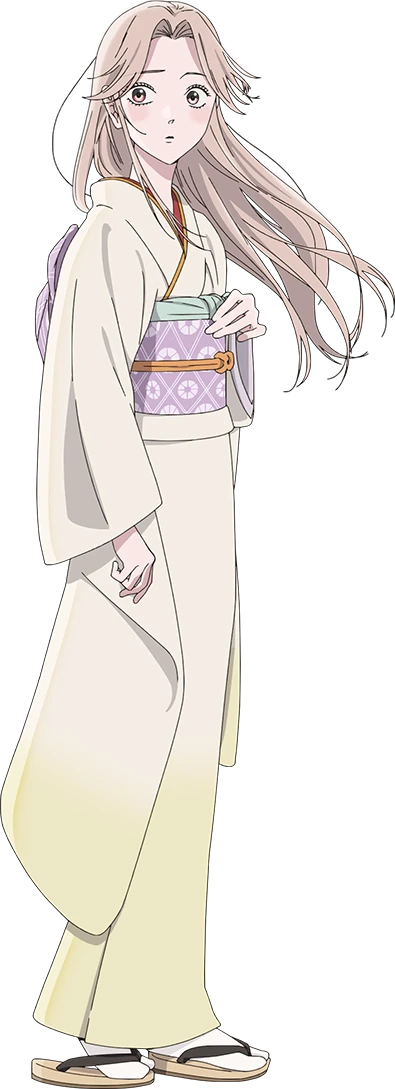
Satoko Kirigaya in the manga
Satoko Kirigaya is a noblewoman with fragile health and a stubborn will to live. Raised to marry for her family’s benefit, she is considerate and resourceful, but struggles to put her own wishes first.
Her proposal to Shinpei begins as a way to survive and grows into love and marriage. She wants a life with him without accepting his violence toward innocent people. Kotaro is her lifelong protector; Miwako becomes an ally after years of rivalry. Choosing Shinpei means resisting her father’s plans for her future.
Learning to want a future for herself.
Satoko begins with a borrowed measure of her worth: a marriage that benefits her father. Her growth involves discovering desires that can survive outside that bargain. Illness makes time urgent, but it never makes her judgment disappear.
Chapter references identify the scenes behind each argument. “Our reading” is an interpretation, rather than a statement of the author’s confirmed intent.
A survival promise becomes a choice
Chapters 1, 18, 42–43
Satoko first proposes marriage when Shinpei threatens her life. Later she nurses him through his injuries. In Chapter 42, she refuses his vision of a marriage cut off from everyone else, then makes a proposal on terms she actually wants: she hopes he can be happy even when she is absent.
Those proposals mark different positions of power. The first buys time inside a threat; the later one follows her ability to disagree with him. Reading the opening as binding romantic consent would erase the work the story does between them.
Her refusal also makes her more than the person who accepts Shinpei unconditionally. She can love him, object to the life he offers, and ask for something different. The ordinary plans in Chapter 43 give that choice a shape beyond escape.
Judgment is one of her strengths
Chapters 13–15, 70–71
When Yukari threatens her, Satoko uses Tamaki’s authority and questions the other women’s dependence on Yukari. Sawarabi and Hatsune eventually restrain Yukari. Much later, Satoko confronts Shinpei with the existence of his victims’ loved ones while continuing to love him.
Her agency often lies in reading a situation, speaking and changing an alliance. Physical frailty and decisive action coexist. Her family background gives her advantages in confidence and negotiation; the island does not make her circumstances identical to those of its women.
Her response to Shinpei also has a limit. She can decide whether to remain with him. She cannot forgive his crimes on behalf of people he harmed. The wound she risks in that confrontation belongs to this dangerous story, rather than a prescription for how love should work.
A life need not be earned through usefulness
Chapters 73, 76 & 79
Satoko exhausts herself attempting domestic work after they return to the island. Shinpei takes on cooking. At their wedding, she gives him a rice bowl and asks him to care for himself. Chapter 79 includes her account of recovering and finding work.
Domestic life changes the scale of her dream. A morning meal and a home matter because she wants to inhabit them, rather than use a marriage to repay her family. Accepting care is part of that life; independence cannot fairly mean doing every task despite her illness.
Her wish for Shinpei to keep living also reaches beyond being indispensable to him. This makes her desire more demanding than a promise to remain his entire world.
The people around Satoko.
 Jubei KirigayaFather · controls her marriage
 Rie KirigayaStepmother · arranges abduction
 Miwako KirigayaHalf-sister · rivalry → support
 Shinpei GotoLovers → spouses
 AsagiriConfidantes & allies
 Kotaro OgawaBodyguard · unreturned love
 AoiFriends
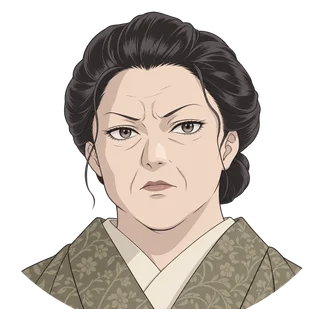 TamakiHouse manager
 Eishin NitobeRejected suitor
 Mitsuharu OkumuraSuitor · medical help