
Love and freedom
Can loving someone leave room for a life of their own?
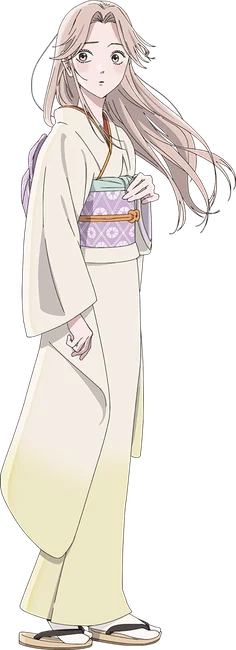
Satoko Kirigaya
桐ヶ谷紗都子Learning to want a future for herself.
Satoko begins with a borrowed measure of her worth: a marriage that benefits her father. Her growth involves discovering desires that can survive outside that bargain. Illness makes time urgent, but it never makes her judgment disappear.
A survival promise becomes a choice
Chapters 1, 18, 42–43
Satoko first proposes marriage when Shinpei threatens her life. Later she nurses him through his injuries. In Chapter 42, she refuses his vision of a marriage cut off from everyone else, then makes a proposal on terms she actually wants: she hopes he can be happy even when she is absent.
Those proposals mark different positions of power. The first buys time inside a threat; the later one follows her ability to disagree with him. Reading the opening as binding romantic consent would erase the work the story does between them.
Her refusal also makes her more than the person who accepts Shinpei unconditionally. She can love him, object to the life he offers, and ask for something different. The ordinary plans in Chapter 43 give that choice a shape beyond escape.
Judgment is one of her strengths
Chapters 13–15, 70–71
When Yukari threatens her, Satoko uses Tamaki’s authority and questions the other women’s dependence on Yukari. Sawarabi and Hatsune eventually restrain Yukari. Much later, Satoko confronts Shinpei with the existence of his victims’ loved ones while continuing to love him.
Her agency often lies in reading a situation, speaking and changing an alliance. Physical frailty and decisive action coexist. Her family background gives her advantages in confidence and negotiation; the island does not make her circumstances identical to those of its women.
Her response to Shinpei also has a limit. She can decide whether to remain with him. She cannot forgive his crimes on behalf of people he harmed. The wound she risks in that confrontation belongs to this dangerous story, rather than a prescription for how love should work.
A life need not be earned through usefulness
Chapters 73, 76 & 79
Satoko exhausts herself attempting domestic work after they return to the island. Shinpei takes on cooking. At their wedding, she gives him a rice bowl and asks him to care for himself. Chapter 79 includes her account of recovering and finding work.
Domestic life changes the scale of her dream. A morning meal and a home matter because she wants to inhabit them, rather than use a marriage to repay her family. Accepting care is part of that life; independence cannot fairly mean doing every task despite her illness.
Her wish for Shinpei to keep living also reaches beyond being indispensable to him. This makes her desire more demanding than a promise to remain his entire world.
Shinpei Goto
後藤進平Devotion becomes growth only when other lives begin to count.
Shinpei’s attachment is intense from the start. What takes much longer to change is his belief that another person’s wishes, or another person’s life, can matter when they obstruct that attachment.
Care and control arrive together
Chapters 16–18, 20–25 & 29
Shinpei tries to obey Satoko’s request not to kill and is badly injured. He also drugs Kotaro and deliberately reopens his own wound to keep Satoko close. In Chapter 29, with Asagiri’s help, he spends hours writing a reply to her letter and finds pleasure in making her happy.
The letter matters because it takes attention and effort without the spectacle of a rescue. It opens a way of relating to her through what she enjoys. Yet the manipulation around Kotaro remains part of the same relationship. Tenderness does not make those acts harmless.
Early obedience depends heavily on keeping Satoko’s affection. That dependence is fragile: if her preference appears to threaten his place beside her, he can treat her wishes as something to manage. His injuries therefore cannot function as a simple certificate of moral improvement.
The victims interrupt his private romance
Chapters 57, 68 & 70–72
In Chapter 57, Shinpei admits killing people around the houses of possible suitors, including witnesses, without knowing which man he was seeking. His childhood memories in Chapter 68 show violence from his mother. In Chapter 70, he recalls victims and their families while acknowledging how he suppressed his feelings to continue killing. Later he assists people beyond Satoko.
His childhood helps explain why he experiences attachment through danger. It does not turn the people he kills into inevitable casualties of his suffering. Chapter 70 shifts attention toward the lives his own romantic story had excluded.
His later care has more weight when it reaches someone who cannot secure Satoko for him. Helping an injured person or preventing another killing extends concern outside the couple. That is a more substantial change than merely becoming a gentler partner in private.
Restraint has to survive absence
Chapters 77–79
Shinpei restrains the urge to kill men seeking revenge in Chapter 77. After believing he has lost Satoko, he finds her written hopes and puts down a knife. In Chapter 79, he travels helping people, discourages a child’s revenge, and acknowledges that this cannot simply repay his past.
The later test is whether he can live without making another person responsible for his every action. Satoko’s remembered wishes help him, but he must keep making the choices himself.
The child seeking revenge brings another family’s loss into view. Shinpei cannot undo that pain. Refusing to help produce another killing gives his changed conduct a concrete purpose while leaving the debt of his past visible.
Offers of protection
What happens when the person offering safety also expects obedience?
Kotaro Ogawa
小川康太郎His strongest act of loyalty is revising his own idea of her happiness.
Kotaro has history, duty and affection on his side. His difficult lesson is that knowing Satoko for years does not give him the final word on what she should want.
A protector can mistake his wish for hers
Chapters 20–25, 30–34
Kotaro arrives with a family mission and his own hope of marrying Satoko. She does not accept his proposal. His attempt to take her away against her wishes leads to their fall and his broken leg. In Chapter 33, she insists that her family’s happiness and her own love can both be dreams worth pursuing. He then helps her and teaches Shinpei about caring for her.
His first answer offers a familiar order: return home, marry safely, let a trusted protector decide. Its attraction is understandable. The problem appears when her disagreement becomes an obstacle he tries to remove.
His later support costs him something he wanted. That makes the change persuasive. He can recognise danger in Shinpei without treating Satoko as incapable of choosing. Loyalty becomes the willingness to remain useful after losing authority over the outcome.
Mitsuharu Okumura
奥村光春Real help does not make a coerced marriage a free choice.
Mitsuharu can offer resources Satoko urgently needs. His contradiction is that he can take her suffering seriously while refusing to take her refusal seriously.
The cure comes attached to a condition
Chapters 54–56, 65, 72–73 & 79
Mitsuharu pursues Satoko despite knowing she loves someone else. In Chapter 65, he makes marriage the condition for sparing Shinpei from execution and protecting her family. He also works to find a doctor. After the interrupted wedding, he continues helping; in Chapter 79, Satoko credits a foreign doctor he summoned with treating her.
His medical help is consequential. It still does not make the earlier bargain consensual. A threat to the person she loves leaves her a choice shaped by force, even when the alternative includes comfort and treatment.
His later care is more generous because it can continue without securing the marriage. That change deserves recognition without turning him into the secretly ideal husband. He shares with the other suitors a temptation to regard the ability to provide as the right to decide.
Eishin Nitobe
新渡戸栄進The respectable rescue exposes how conditional his regard is.
Nitobe initially fits the marriage market’s promise of safety: a well-connected man can pay for release and treatment. His behaviour exposes how little that promise says about respecting the person being rescued.
An offer becomes an assertion of entitlement
Chapters 6–8 & 48
The police chief’s son offers to buy Satoko out and marry her, then assaults her after drinking. Shinpei interrupts the attack. Chapter 48 reveals that Jubei intended Nitobe to play the rescuer in a plan to arrange Satoko’s marriage.
The violence is a test of his character that pedigree cannot pass for him. Alcohol is present in the scene; treating it as the whole explanation would hide the entitlement expressed in his treatment of Satoko.
His place in Jubei’s scheme also makes rescue a transaction with a desired ending already chosen by someone else. From Satoko’s position, being valuable to a suitor does not guarantee being heard.
Surviving the island
How much freedom can a person exercise inside a system built to keep them dependent?
Asagiri
朝霧Choosing freedom can still mean choosing among painful bargains.
Asagiri understands the island well enough to distrust a promise made on her behalf. Her authority and composure are hard-earned protections, with limits the story eventually makes visible.
Being bought out is not the same as being asked
Chapters 26–29, 38–40, 51–53
Asagiri resists the proposed buyout and sets conditions of her own. Yanagida’s abuse has left scars she conceals from Mitsueda. Chapter 52 recounts Mitsueda’s refusal to flee and his death. Asagiri says she will marry the powerful patron who bought her freedom; her tears complicate the indifference she performs in front of Satoko.
She has good reasons to examine the price of someone else’s rescue. Mitsueda’s love can coexist with the wish to decide her future. Her resistance gives the question of consent a place even inside a plan described as liberation.
The later marriage is a choice with material force behind it. Calling it a straightforward happy rescue loses the grief and compromise. Calling her unfeeling loses what the tears show. Her survival can be purposeful without being painless.
She asks Satoko to own a decision
Chapters 29 & 53
Asagiri helps Shinpei answer Satoko’s letter. Later, her own letter challenges Satoko to decide how she will live and whom she will choose.
Her influence extends beyond helping the couple meet. She insists that Satoko stop treating a choice as something circumstance, family or a rescuer must make for her. The advice carries weight because Asagiri knows how narrow the available choices can be.
Mitsueda
三枝Complicity and compassion remain in the same man.
Mitsueda is involved in the machinery that traps Satoko. His love for Asagiri and his later efforts for the younger couple make that involvement harder to simplify, rather than making it disappear.
His own rescue fantasy has a blind spot
Chapters 1–4, 26–29, 44–46 & 52
Mitsueda helps arrange Satoko’s abduction. He wants to buy Asagiri’s freedom, and their conflict includes his attempt to push that plan through. Jubei’s hold over them has lasted fifteen years. Mitsueda later pleads for Satoko and Shinpei; Chapter 52 recounts his refusal to flee with Asagiri and his death.
His wish for an ordinary life with Asagiri is moving partly because of how long it has been denied. Yet longing for that life can turn into a claim over her answer. The person who feels trapped can still try to direct another person’s future.
His later compassion shows the possibility of acting differently inside a compromised life. It asks us to hold more than one judgment at once: he has helped cause harm, he has been controlled, and he can still care about people caught in a similar bargain. A final sacrifice cannot restore the choices already taken from others.
Aoi
葵Friendship does not erase the difference between their exits.
Aoi gives Satoko practical help and a different language for love. She also sees that the newcomer has possibilities the women already living on the island may never receive.
Care survives an honest disagreement
Chapters 10–15
Aoi teaches Satoko the brothel’s work and discusses love with her. She also locks Satoko and Shinpei in a hut out of resentment. Later she despairs over an absent lover and her prospects of leaving. The cliff gives way beneath her during the crisis; Satoko reaches for her without claiming to understand everything she has lived through.
Her resentment makes the friendship uncomfortable in a useful way. Satoko’s courage is real, but courage alone cannot explain the unequal chances of leaving. Aoi’s anger brings that inequality into the relationship.
Satoko’s response permits care without an easy claim of sameness. She does not need to experience Aoi’s entire life before trying to save her. Aoi, in turn, can offer help and inflict harm without either act becoming the only truth about her.
Yukari
紫She turns a little access to power into power over other women.
Yukari’s jealousy is personal, but her ability to act on it depends on the brothel’s economy. Following the customers matters as much as following the romantic rivalry.
Dependence keeps the alliance in place
Chapters 6, 10–14
Yukari wants Shinpei’s affection and threatens Satoko. She expects Sawarabi and Hatsune to help because she supplies access to customers. Satoko challenges that arrangement, and the women turn against Yukari during the confrontation.
Yukari uses an advantage inside an exploitative setting to make others obey her. That gives the intimidation a structure beyond dislike: refusing her may appear to threaten someone’s income.
The setting helps explain how her authority works. It does not excuse the violence she directs at Satoko. Reading her only as a jealous rival would miss both her own dependence and the dependence she exploits.
Sawarabi
早蕨Obedience becomes negotiable when its cost is spoken aloud.
Sawarabi helps make Yukari’s threat possible. Her change of position reveals that the group’s apparent unity depends on pressure and advantage.
An alliance can be interrupted
Chapter 13
Sawarabi joins the confrontation with Satoko. Yukari invokes the customers she provides. After Satoko challenges that dependence and asks for help, Sawarabi and Hatsune restrain Yukari.
The scene gives a subordinate person room to act, without pretending that her earlier participation was harmless. Satoko’s intervention makes another alignment possible. Economic dependence helps explain her hesitation; it need not define every later decision.
Hatsune
初音The threat changes when a follower stops lending it her hands.
Hatsune is not given the sustained viewpoint of the leading characters. Her role is still important to the mechanics of the confrontation: Yukari needs other people to enforce her will.
Collective pressure can change direction
Chapter 13
Hatsune helps Yukari intimidate Satoko alongside Sawarabi. By the end of the encounter, she and Sawarabi hold Yukari back instead.
Her reversal shows how a bully’s power can depend on continued participation. Withdrawing that support has an immediate physical effect, even before anyone proves a complete change of heart. Reading the action at that scale preserves what the chapter actually gives her.
Tamaki
環Authority within the house can offer leverage without offering freedom.
Tamaki occupies an institutional position the other women have to take seriously. That makes her name a resource Satoko can use in a dangerous encounter.
A rule can restrain one form of harm
Chapters 13–15
Tamaki manages the brothel. During the threat from Yukari, Satoko appeals to the consequences of bringing the matter to Tamaki’s attention.
The house contains rules and hierarchies as well as violence. Satoko recognises a point where those rules may protect her. That limited protection should be measured against the larger conditions of the women’s work, which the appeal does not overturn.
Yanagida
柳田宗光His abuse depends on being able to make power answer for him.
Yanagida makes the danger of the patron system visible on Asagiri’s body. His importance reaches beyond being an opponent Shinpei can defeat.
Possession is backed by an institution
Chapters 38–40
Yanagida abuses Asagiri and cuts his name into her skin. Armed police are present during the attempt to free her from his control. Shinpei leaves him alive with facial injuries; his access to the brothel is cut off.
The claim of ownership is literalised through injury, while the police presence shows why resisting him is dangerous. Money and official force protect the patron’s ability to harm.
His defeat removes an immediate threat. It does not demonstrate that the same system is now safe for every woman. Treating him as the entire source of the island’s cruelty would make that cruelty too easy to end.
Family and its bargains
When affection and status collide, whose future becomes negotiable?
Jubei Kirigaya
桐ヶ谷十兵衛His love becomes dangerous when he treats a daughter’s future as an asset.
Jubei’s concern for Satoko’s health is part of his character. So is his willingness to arrange suffering, rescue and marriage around an outcome that benefits his idea of the family.
He directs the crisis and the rescue
Chapters 44–48 & 71
Jubei shoots Shinpei when the couple return; Satoko is hit while shielding him. The later reveal identifies Jubei as the island’s owner and shows that he knew where she was. He intended to use Nitobe’s rescue to secure a marriage. In Chapter 71, he is arrested over the attempted assassination of Ryunosuke. Satoko still expresses love for her father.
A father who can pay for treatment may still make his daughter’s body and marriage serve a family strategy. The planned rescue lets him present control as care: the desired husband becomes the answer to a crisis he has allowed to develop.
His emotional attachment need not be fake for his conduct to be abusive. That is what makes Satoko’s continuing love difficult. Her feeling records the bond she has lived with; it cannot serve as evidence that his choices were justified.
The arrest also has a narrow cause. It addresses an attack on another powerful man. Reading it as justice for every island victim would give the ending an institutional resolution it does not show.
Rie Kirigaya
桐ヶ谷りえShe tries to advance one daughter through the destruction of another.
Rie treats the daughters’ prospects as a competition for attention, marriage and rank. Her action shows how a family’s marriage logic can turn women against one another.
Status turns cruelty into a strategy
Chapters 1–4 & 47–48
Rie commissions Satoko’s abduction with the aim of ruining her marriage prospects and improving Miwako’s. The later explanation reveals Jubei’s separate use of the situation for his own marriage scheme.
Her plan depends on the expectation that violence against a young woman can reduce that woman’s social value. The cruelty belongs to Rie; the assumptions that make it a plausible strategy extend beyond her.
She therefore participates in the same competitive structure that constrains the daughters. It is possible to see that structure clearly while holding her responsible for deciding to harm Satoko. Her maternal preference does not soften the means she chooses.
Miwako Kirigaya
桐ヶ谷美和子She can help her sister before becoming free of rivalry.
Miwako has learned to measure attention as something Satoko receives at her expense. The later chapters give her actions that cannot be contained by that first impression.
A useful act can have mixed motives
Chapters 49–53
Miwako helps Satoko put genuine feelings into the letter meant to break with Shinpei and helps them meet. She later stops Satoko from harming herself. In Chapter 53, she still voices her own competitive interest in becoming the family’s most valued daughter.
Her help does not require a completed transformation into a selfless sister. The rivalry continues, yet she acts at moments when Satoko needs someone. That combination makes the change more credible than an abrupt reversal of personality.
The sisters have been placed inside a contest neither invented. Miwako’s later choices interrupt its expected result: the rival can also be a person whose pain she recognises. She has not solved the family’s hierarchy, but she does something within reach that matters.
Ryunosuke Okumura
奥村龍之介His ability to enforce order does not make that order just.
Ryunosuke’s authority changes what the younger characters can obtain and whom they can defy. It also exposes how much a personal outcome depends on decisions made above them.
Family discretion sits above other lives
Chapters 64–65, 71–72
Ryunosuke heads the powerful Okumura household. He is the target of Jubei’s assassination scheme, exercises authority over Shinpei’s fate, and accepts Mitsuharu’s request to pursue Satoko’s treatment and marriage. Jubei’s later arrest concerns the attack on him.
The father can permit a search for a doctor while the same household determines whether another man will be executed. That breadth of discretion makes kindness possible, but makes other people dependent on receiving it.
His conflict with Jubei is a conflict among powerful men. An outcome that helps Satoko in that conflict should not be mistaken for the liberation of everyone under the island’s system. The manga gives a personal escape more clearly than a transformed social order.
The question that keeps returning.
What room does love leave for the other person’s answer?
Our reading Shinpei, Kotaro, Mitsuharu and Jubei offer different forms of protection. At crucial moments, each has to face Satoko wanting something beyond the future he has pictured for her. Their resources and conduct differ enormously; the recurring question helps us compare them without declaring their actions equivalent.
The island women show why choice needs material conditions. Having a preference is not enough when money, customers, violence and powerful patrons determine whether it can be acted on. Asagiri’s bargains and Aoi’s resentment keep that difficulty in view.
Change becomes clearest in a specific act: listening to a refusal, giving help without obtaining a marriage, withholding violence, or supporting someone after losing the future we wanted. Those acts matter. They also leave the consequences of earlier harm in the story.
Back to the spoiler control ↑